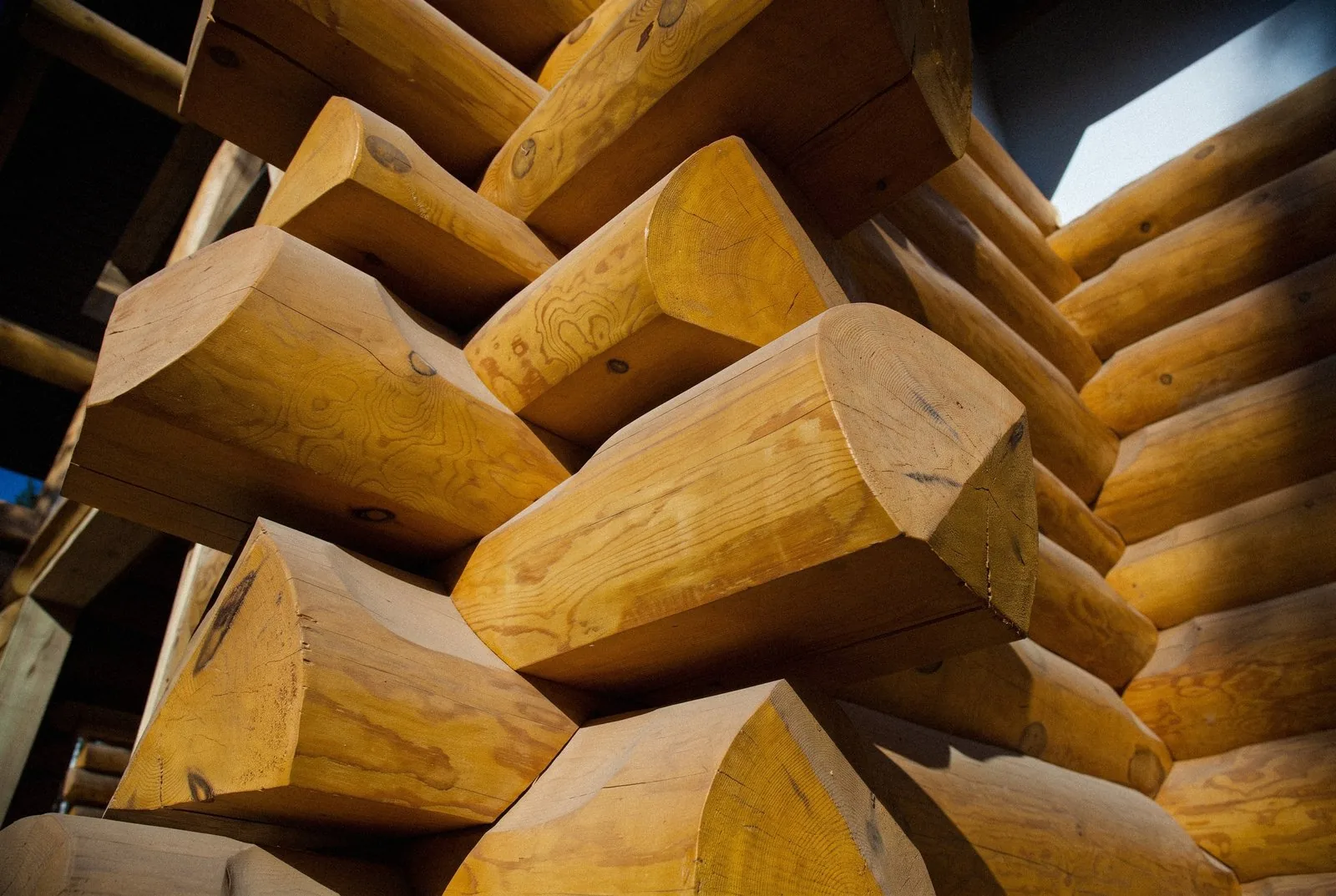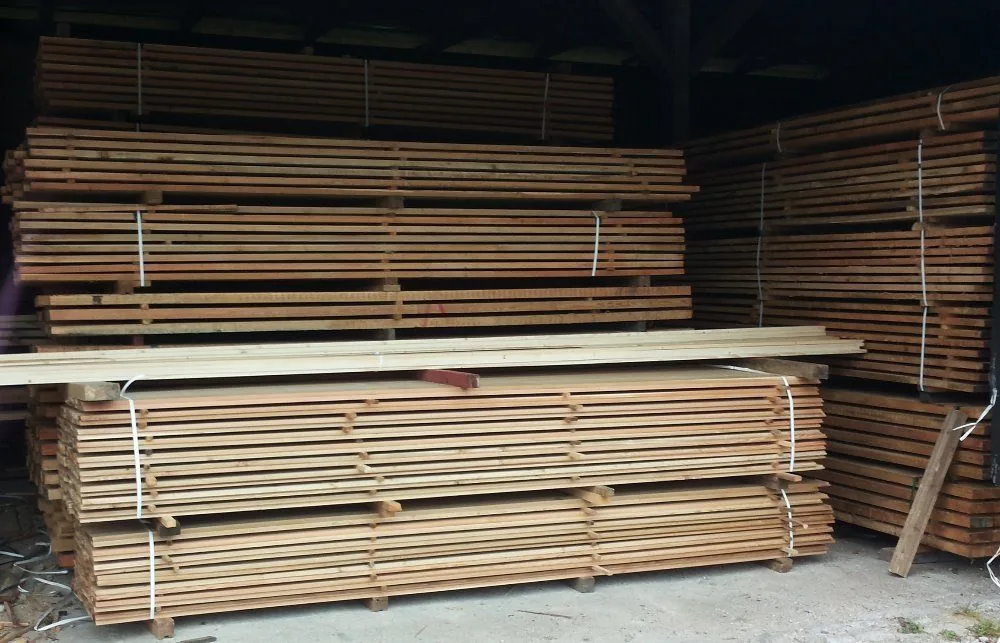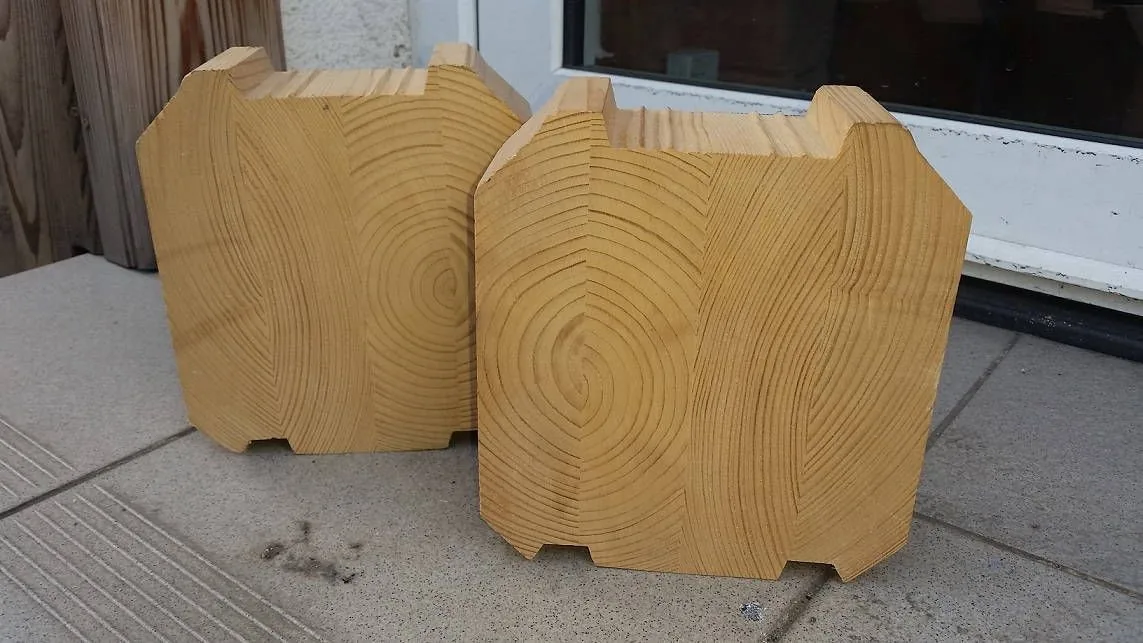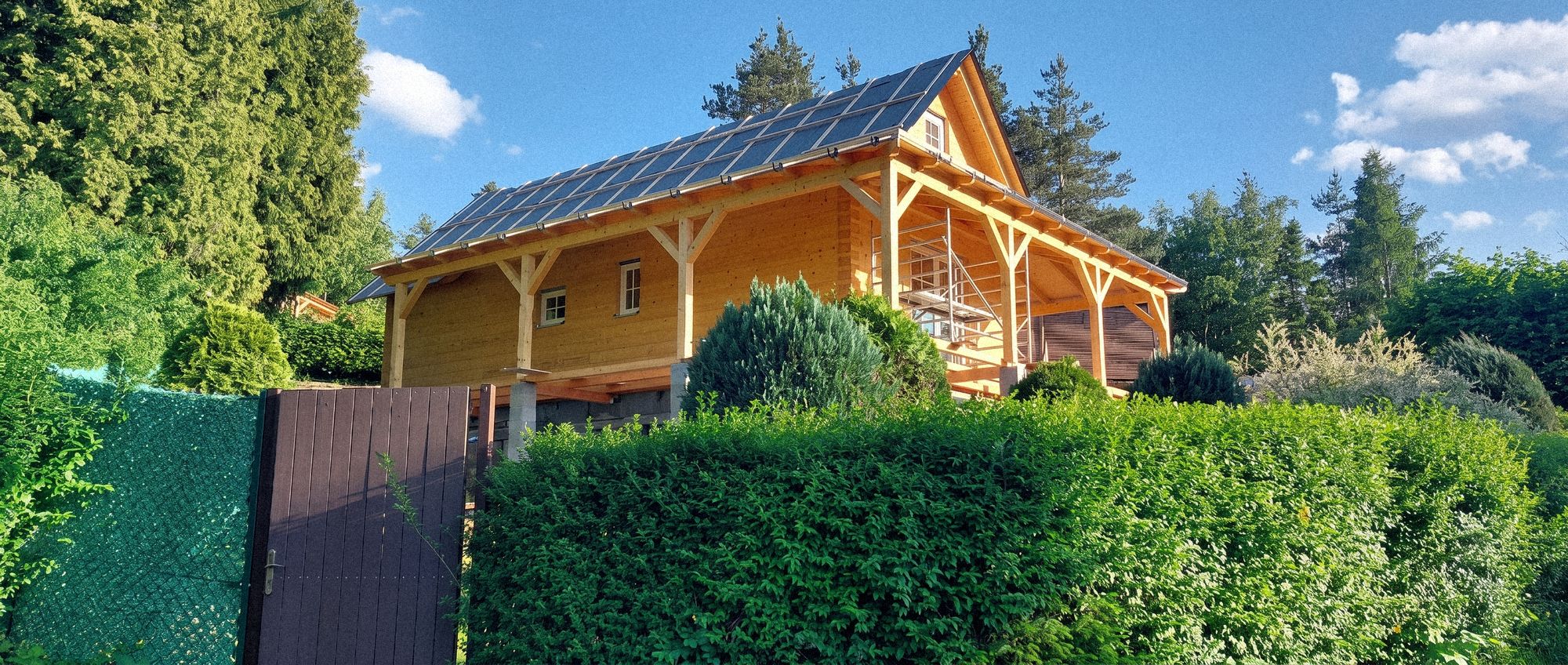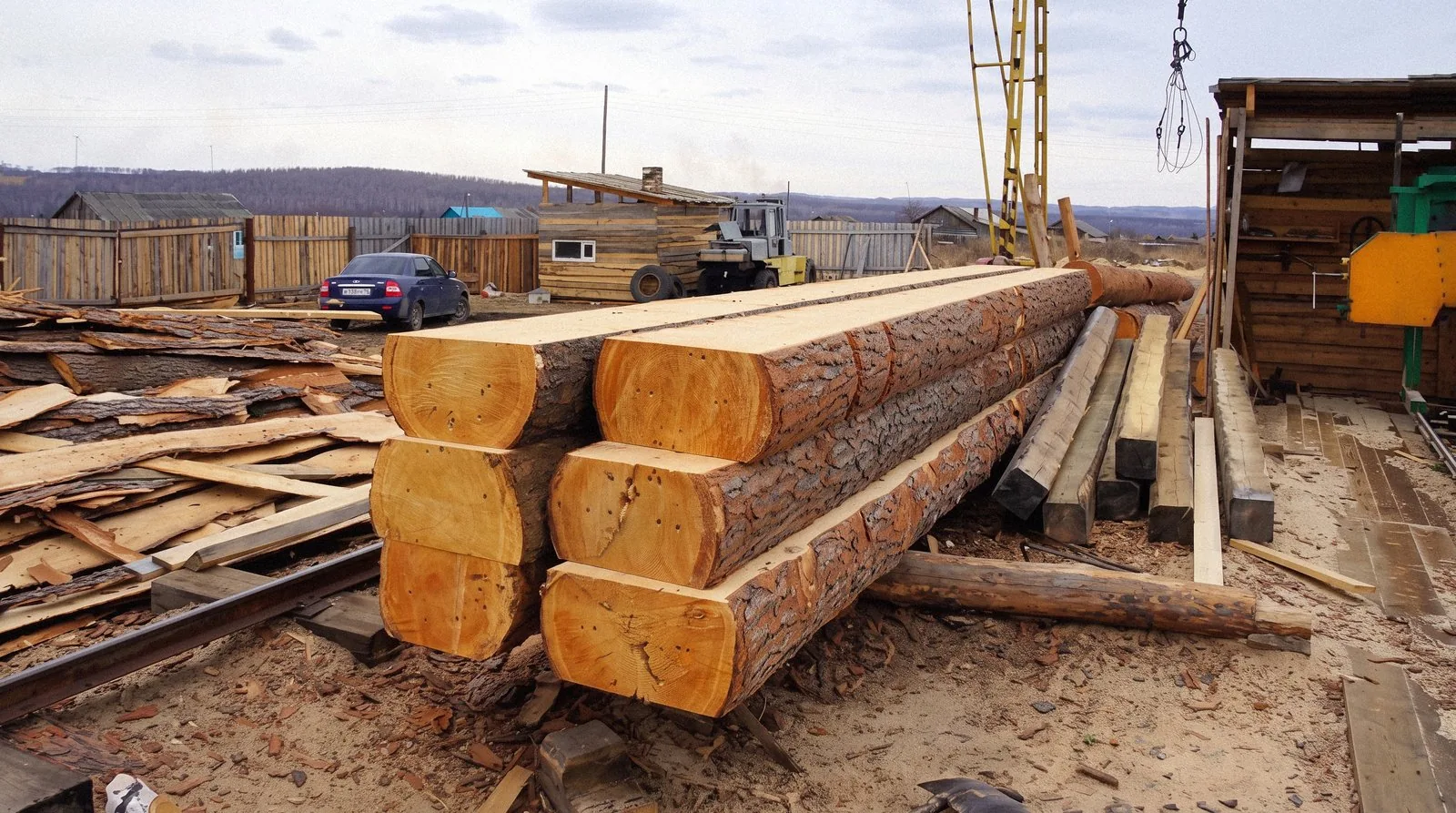
Softwood felled in winter, while the tree is dormant, holds fewer nutrients and more resin acids and essential oils. That makes it more resistant to rot, mould and insects, less prone to cracking and more stable in shape. Historical observations suggest it lasts roughly twice as long as summer-felled timber, which is why we fell timber for our buildings only between November and mid-March.
Moon wood explained
Felling what’s known as moon wood revives a traditional practice, rediscovered and still championed today by the Austrian forester and sawmiller Erwin Thoma. The trees are felled in winter, while they’re dormant, and during a waning moon. At that point the wood contracts, grows denser and holds less sap.
The second part of the method: the felled trees are left lying for several weeks with their crowns pointing downhill, so that as much water as possible drains from the trunk into the branches.
Timber harvested like this is far more resistant to wood-boring insects and rot, and markedly more stable in shape. That’s why we choose it for our buildings.
What matters most in building timber
L. M. Perelygin’s textbook Wood Science has the answer:
“Under unfavourable service conditions, which include fluctuating humidity and ambient temperature, wood decays relatively quickly. The rate of decay depends on the natural durability of the species.”
The walls of a house are exactly that kind of environment. So the single most important property of building timber is natural resistance to rot. It decides not only how long the building lasts but also the quality of the air inside, because rotting wood releases substances that are harmful to the people living there.
And that resistance depends largely on resin content. It’s why pine outlasts spruce or fir in the same conditions.
Winter and summer timber: what’s the difference?
The main component of pine resin is levopimaric acid, which accounts for 34 to 37% of it. Together with other acids, it determines how strong an antiseptic the resin is. Resin gathered in winter contains more of these acids and essential oils than summer resin, because in summer the tree’s metabolism runs at full pace and its needles lose more through evaporation.
The second difference lies in nutrients. According to Perelygin, timber felled in the growing season, from spring to autumn, is less resistant to rot because it holds more readily available organic matter. E. J. Lundberg says the same in his book The Art of Building: summer-felled timber rots more easily because it’s richer in nutrients.
More nutrients for fungi and rot bacteria, fewer natural antiseptics. It rots faster and doesn’t last as long.
Fewer nutrients, more resin acids and essential oils. It’s more durable and lasts longer.
Six common arguments for summer felling
Sellers of summer timber, and some building magazines, claim the felling season makes no difference. We’ve taken a look at the most common arguments.
- “Farmers only felled trees in winter because they were too busy in summer.”
Between sowing and harvest there are several quieter weeks. And a house is something you build once in a lifetime. If summer timber were better, our ancestors would have found the time to fell it, instead of wading through snow to get it.
- “Timber is easier to fell and haul out in winter.”
We’ll grant the point about hauling over frozen ground. But felling trees knee-deep in snow is hardly easier.
- “Mechanically, summer timber is no different from winter timber.”
In the dormant season the wood is contracted and holds less water, and that’s what makes it more durable.
- “Winter timber is wetter.”
Only for a while. If the logs are debarked by early March, they dry out enough before the warm days arrive to be safe from mould and blue stain.
- “A log house built from summer timber shrinks less.”
The absolute moisture content differs by just 10 to 12%, so any difference in shrinkage is a few millimetres at most. With the right technique and timber species, there may be none at all.
- “Winter timber cracks more.”
The reverse is true. Stored and dried the same way, winter timber cracks less.
We’ll help you choose the right timber species and technique for your house.
When building timber was traditionally felled
In Belarus, softwood for building was felled in December and January. The bark had to come off by the first ten days of March at the latest, and the timber was then left to dry for a year or two. Houses were built from dry timber only.
In his book The Wooden House, Alexander Sobolev recalls that, by tradition, work on building timber began on Winter St Nicholas Day, 19 December, and that trees were felled at the new moon. Folk belief had it that timber felled under a partial moon would rot.
An old Russian magazine from 1867 describes an experiment with pines from a single site, felled in December, January, February and March over four consecutive years. Ceiling beams cut from the December timber bore the heaviest load. So how big is the difference in lifespan?
“Of two pines of the same age from the same site, buried in damp soil, the one felled in February was completely rotten after eight years, while the one felled in December was still perfectly sound after 16 years in the same soil.”
In other words, the December timber lasted at least twice as long as the February timber. And since February already comes just before the growing season, a similar gap can be expected with summer-felled timber.
What this means for your house
The best timber for a log house is winter-felled pine. If you can’t get pine, the next best choice is another softwood, such as spruce, fir, cedar or larch, but always felled in winter. Hardwoods, with the exception of oak, are unsuitable for log house walls because they resist rot poorly.
- Our carpenters fell timber in the winter season, between 1 November and 15 March.
- They pick healthy, tall, straight trees with no defects, roughly 110 years old or more.
- The trunks for any one building are almost exactly the same diameter.
- Winter timber gives off very little resin when heated, which makes it ideal for saunas too.
Summer timber, by contrast, brings two serious problems. Wet timber develops blue stain very quickly, often despite prompt debarking and proper storage. And it’s more easily attacked by harmful insects.
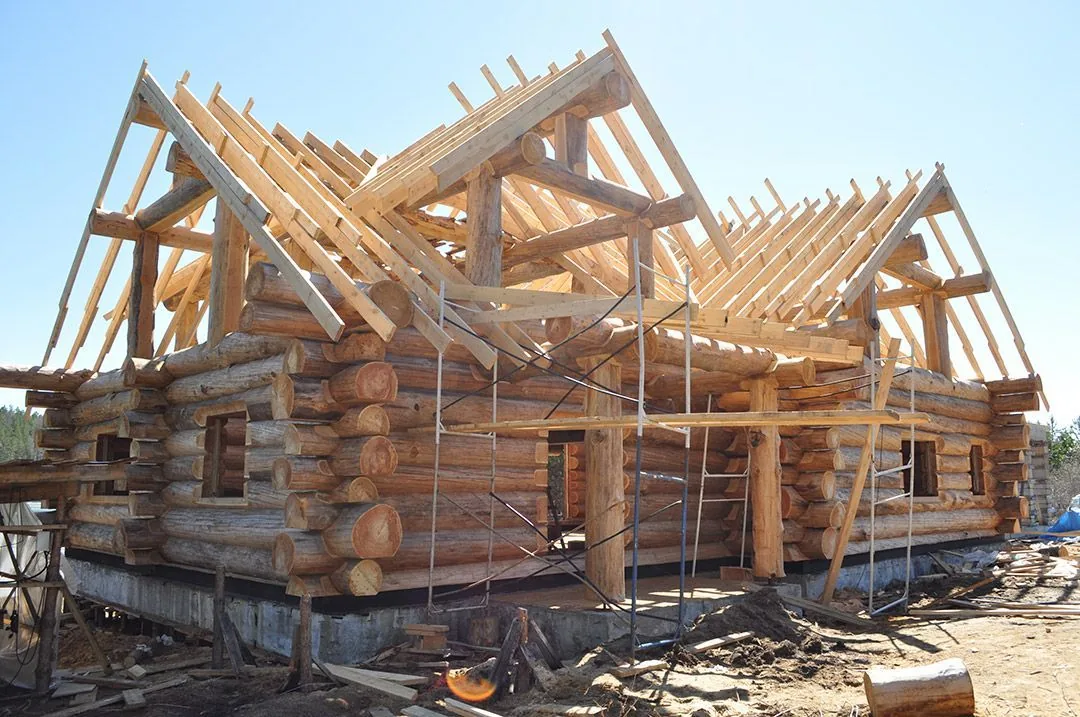
“In winter the forest sleeps, and when we fell it, it stays asleep but alive. A building made from this timber will be alive too.”